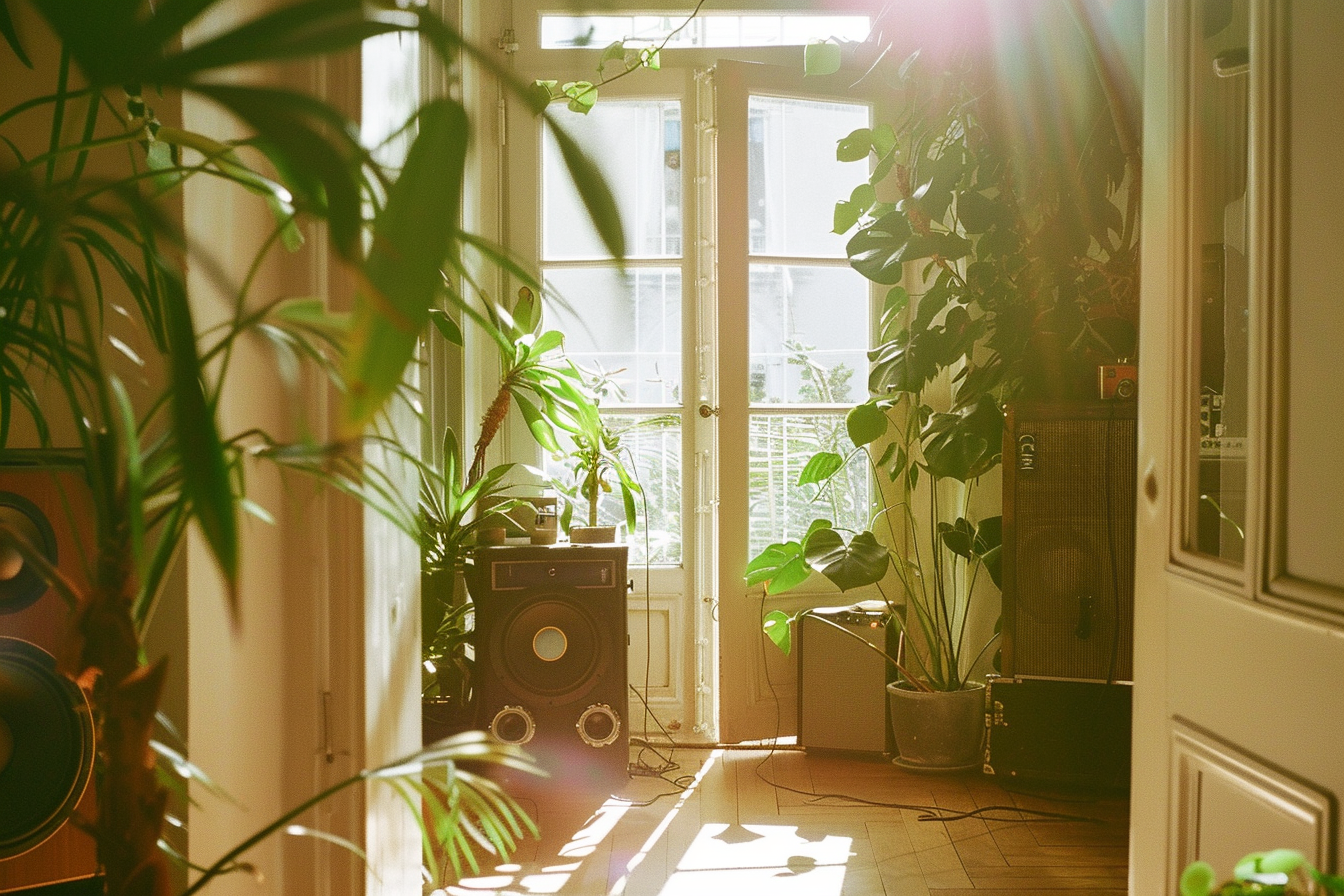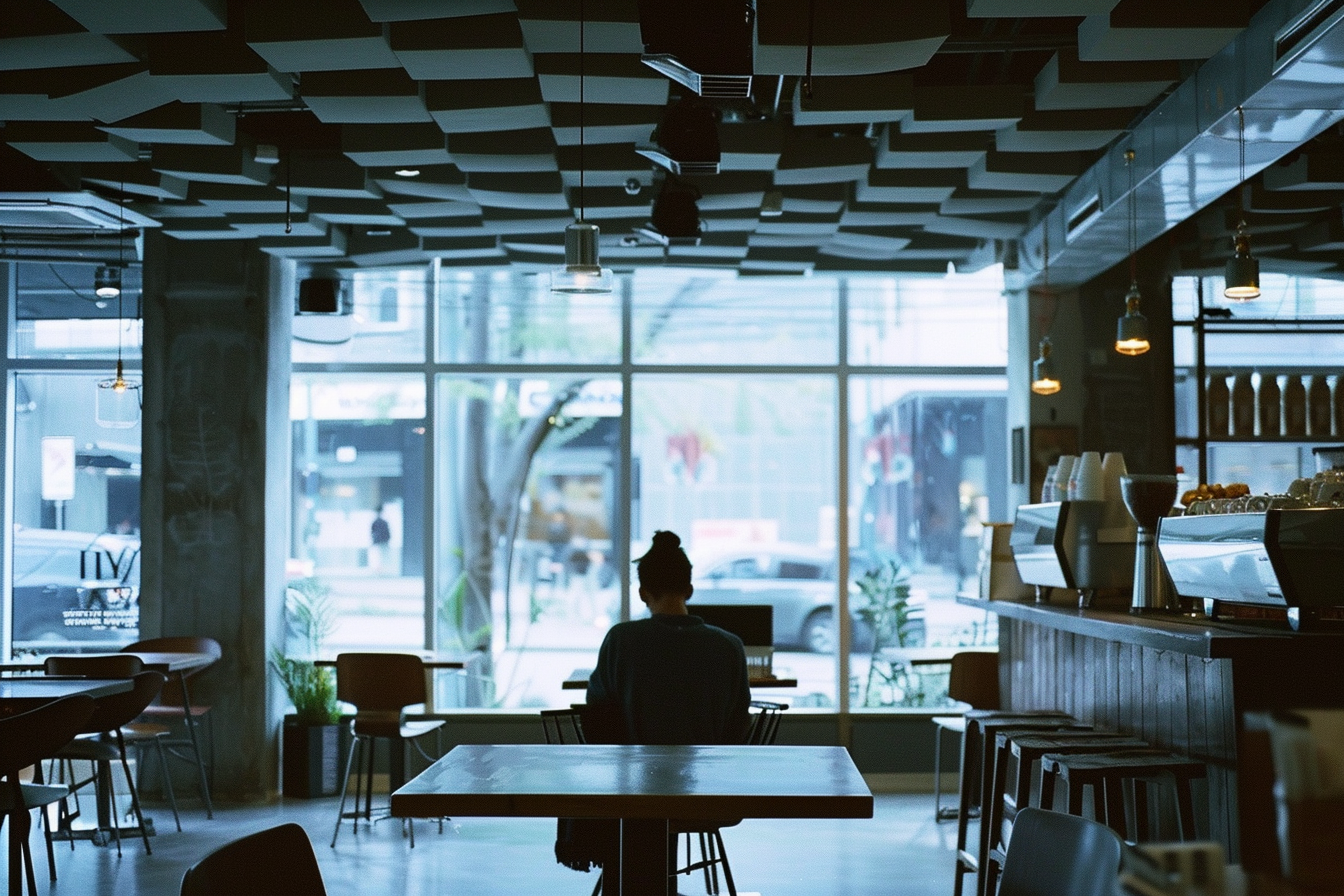
There’s this coffee shop I used to love. Emphasis on used to.
It was chaotic and loud and kind of grimy in that perfect Portland way. People actually talked to each other. Local musicians would set up in the corner unannounced. The espresso machine was ancient and screamed like a banshee. Someone was always arguing about something. There were regulars who’d been coming for 15 years. It had a sound, you know?
Last year, it got bought out, renovated, and “elevated.”
Now it has acoustic panels on the ceiling, a curated Spotify playlist at exactly 68 decibels, new quiet espresso machines, and a “please be mindful of our peaceful atmosphere” vibe upon entry.
Everyone whispers. Nobody makes eye contact. It’s full of people on laptops wearing noise-canceling headphones.
The coffee’s better, I guess. But the soul is completely gone.
This is sonic gentrification, and it’s happening everywhere.
What Even Is Sonic Gentrification?
Regular gentrification, we all know: neighborhood gets “discovered,” rents go up, longtime residents get pushed out, local businesses close, everything becomes expensive and boring.
But there’s an acoustic dimension to this that nobody talks about. The soundscape changes just as dramatically as the visual landscape, and often it’s the first sign that a neighborhood is shifting.
New businesses bring different sounds. Chain stores have corporate playlists. Upscale restaurants enforce quiet dining. New residents complain about “noise” that longtime residents considered normal community sound (kids playing, music, street vendors, churches).
The acoustic diversity gets replaced by acoustic homogeneity. Every coffee shop sounds like every other coffee shop. Every neighborhood starts to sound like every other neighborhood.
It’s the sonic equivalent of replacing local architecture with identical luxury condos.
The Coffee Shop Thing (My Thesis)
Coffee shops are like the canary in the coal mine for sonic gentrification.
Old-school coffee shops are acoustically chaotic. Hard surfaces, no sound absorption, loud machines, people talking at normal volumes, community bulletin boards, local musicians, the occasional person having a breakdown, real human sound happening in real time.
“Elevated” coffee shops are acoustically controlled. Sound-absorbing materials, quiet machines, curated playlists, “library rules” about voice volume, everyone isolated in their own digital bubble.
One is messy and human. The other is optimized and sterile.
And here’s the thing, I get why the quiet version is appealing. I’ve definitely gone to coffee shops specifically because they’re quiet enough to work in. I’m part of the problem.
But when every coffee shop becomes the quiet version, we lose something important. We lose third places where unplanned acoustic interaction can happen. We lose one of the soundtracks of that community.
The Playlist Economy
Can we talk about how every single coffee shop, restaurant, and retail store now has the exact same Spotify playlist?
You know the one. “Chill beats or soft indie folk for your artisanal experience.” Slightly melancholic. Inoffensive. Perfectly mixed to sit right at the edge of conscious awareness without demanding attention.
It’s been scientifically optimized to make you spend more money and stay longer without realizing time is passing. It’s acoustic manipulation disguised as ambiance.
And it’s everywhere. Coffee shop in Portland? Same playlist. Boutique in Brooklyn? Same playlist. Hotel lobby in Austin? Same playlist.
We’ve traded local sonic identity for algorithm-generated atmospheric music, and called it an upgrade.
I miss when places played actual music someone actually chose because they actually liked it. Even if it was weird. Especially if it was weird.
Now everything sounds like it was designed by the same AI that writes those “10 hours of rain sounds for studying” videos. Which, honestly, it probably was.
The Noise Complaint Phenomenon
Here’s a pattern I keep seeing: new residents move into a neighborhood that’s been a particular way for decades, then immediately start filing noise complaints about the sounds that make that neighborhood what it is.
Church services on Friday nights. Music venues that have been there for 30 years. Street vendors. Kids playing in parks. Community gatherings. Cultural celebrations.
Suddenly it’s all “noise pollution” that needs to be regulated.
I watched this happen in a few neighborhoods here in Portland and other cities. A new apartment building goes up, and within six months, the residents successfully shut down:
- A chess game that’s been happening in the park every day for decades
- Minority-owned bars and clubs
- A group of youth practicing hip-hop dances on the sidewalk (too much “yelling”)
- A black church that has choir practice on a weeknight
These weren’t new sounds. They’d been there for years. But new residents had different expectations for what a neighborhood should sound like, and they had the resources to enforce them. In some cases, they had the help of neighborhood associations and city officials.
This is sonic privilege in action. The ability to reshape a soundscape to match your preferences, regardless of what that soundscape meant to the people who were already there.
What We’re Actually Losing
When neighborhoods get sonically gentrified, here’s what disappears:
Acoustic diversity. Different languages, different music traditions, different ways of using sound in public space. All replaced by the same acceptable ambient noise.
Spontaneous sound. Street musicians, people having loud conversations, kids being loud, life happening audibly in public. Replaced by quiet compliance and digital isolation.
Community soundmarks. The distinctive sounds that made a place unique. The vendor who sang while selling tamales. The church with the drums and tambourines. The local band that practiced in their garage. All gone.
Intergenerational mixing. Quiet spaces tend to skew toward a specific demographic (young professionals on laptops). Louder, more chaotic spaces allow for more age and cultural mixing.
What we’re left with is acoustically boring, safe, predictable, and utterly forgettable.
My Complicated Feelings About This
Full disclosure: I benefit from sonic gentrification.
I sometimes like quiet coffee shops where I can work. I appreciate sound-absorbing acoustic panels. I’m grateful for noise ordinances that keep my neighbor from blasting music at 3am.
But I also mourn what’s being lost. I miss the chaos. I miss the unpredictability. I miss feeling like I was in an actual place with actual people instead of a carefully curated consumption space.
I want both, and I’m not sure we can have both.
Maybe the solution is more acoustic diversity in neighborhoods? Like, some coffee shops are quiet and some are chaotic and people can choose based on their needs? Some streets are lively and some are peaceful and we stop trying to make everything the same?
I don’t know. I’m still figuring it out.
What You Can Do (If You Care)
Support businesses that have distinctive soundscapes. The ones that play weird music, that let local musicians perform, that allow normal human noise levels.
Push back on overly restrictive noise ordinances. Not all community sound is “noise pollution.” Some of it is just life happening.
Be mindful of acoustic expectations when you move somewhere new. If you move to a neighborhood with a particular sonic character, maybe don’t immediately try to change it to match your preferences?
Create space for acoustic diversity in your own life. Don’t just seek out quiet all the time. Let yourself experience some sonic chaos occasionally.
I don’t have all the answers here. But I think it’s worth paying attention to how our soundscapes are changing, and asking whether we’re okay with everything sounding the same.
Because once the sonic identity of a place is gone, it’s really hard to get it back.
Have you noticed this in your own neighborhood? What sounds have disappeared? What’s replaced them? I’m collecting these stories.