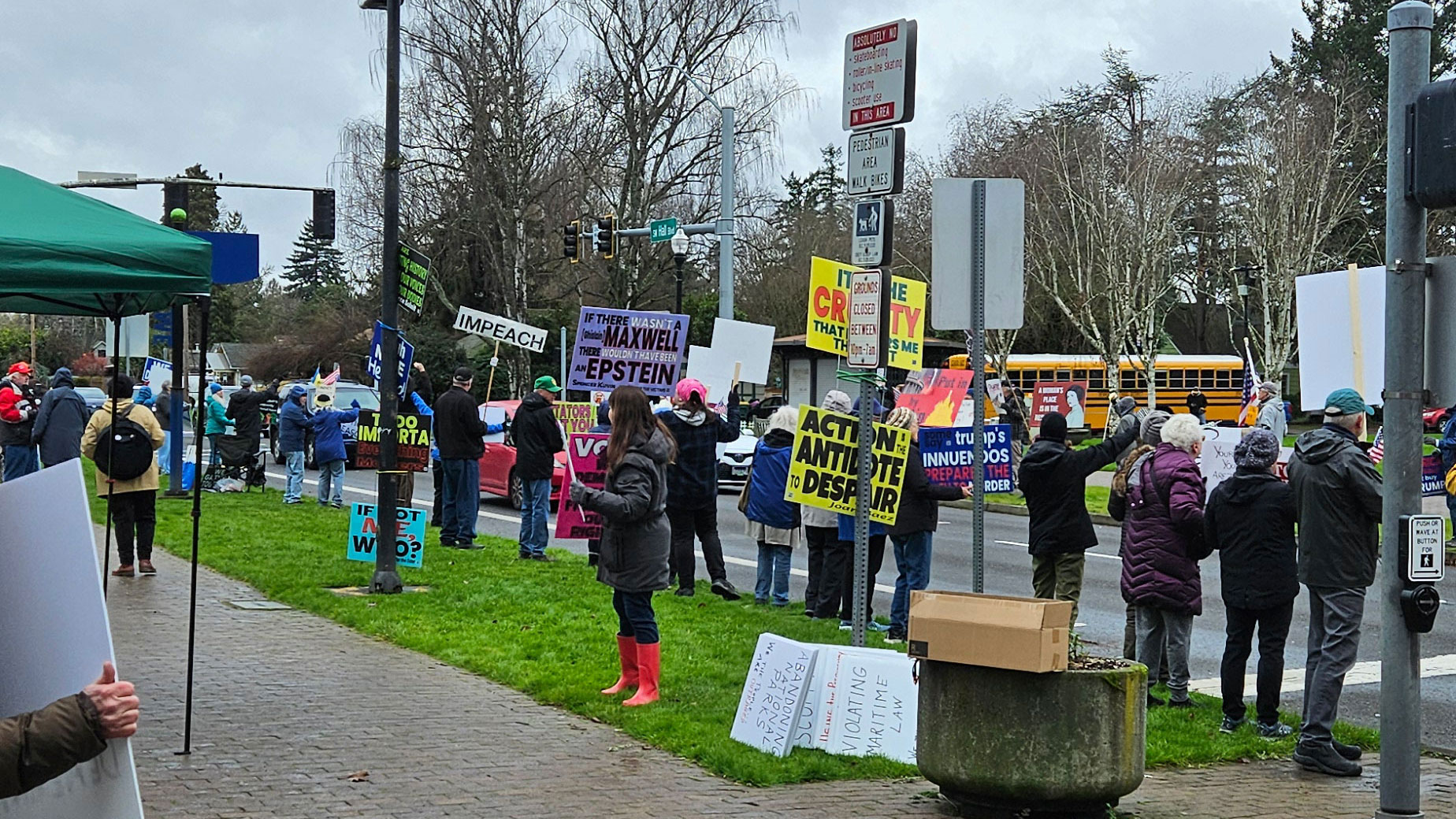
In cities and towns across the United States, a new soundmark is emerging. Not the familiar sounds of traffic, construction, or commerce, but the sharp, sustained blast of whistles, blown by residents warning their neighbors that federal agents are nearby.
The whistle is having a moment. And it’s worth exploring why.
The Acoustic Properties of Warning
From an acoustic point of view, whistles are highly effective signaling tools. They produce sound in the 2-4 kHz range, where human hearing is most sensitive. This allows them to be heard over urban sound, at a distance, and through walls. Unlike speech, which requires understanding language, a whistle immediately and universally conveys urgency.
R. Murray Schafer distinguished between signals and background sounds in his foundational work on acoustic ecology. Signals, he explained, are sounds we listen to deliberately, sounds that demand attention and action. The whistle is a perfect example of a signal. It pierces the soundscape, impossible to ignore, designed to interrupt whatever you’re doing and redirect your awareness.
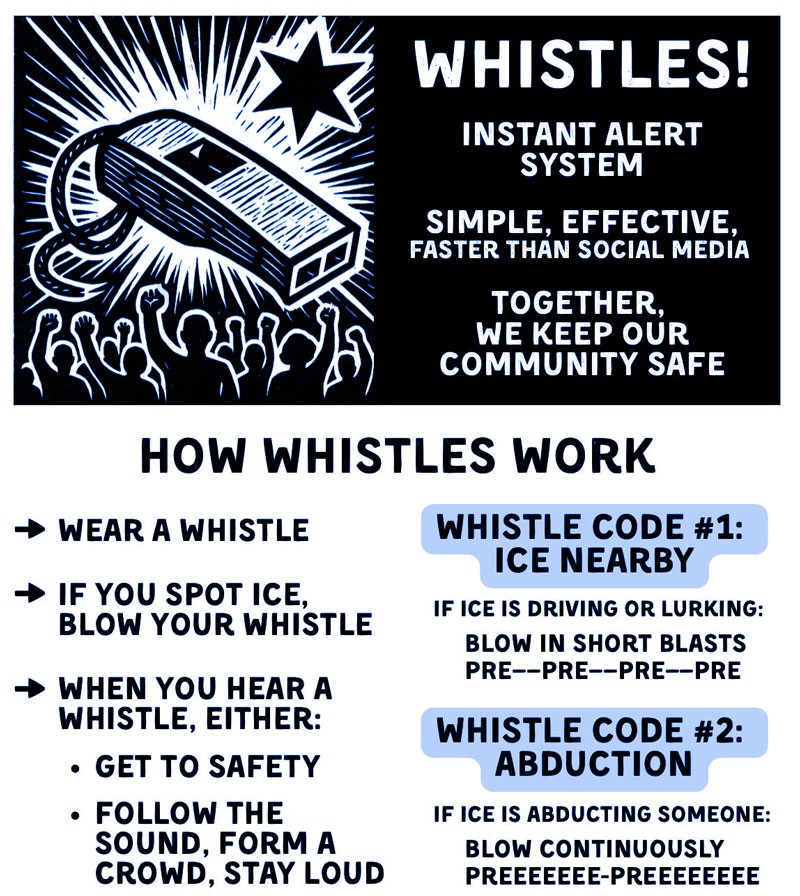
In sanctuary cities and immigrant and refugee communities facing increased federal enforcement, this acoustic signal offers protection. The whistle travels faster than a phone call, reaches people who might not be in group chats, and alerts those who are busy working or unaware of what is happening in real time. It creates what we might call an acoustic safety net, a sonic infrastructure of mutual aid.
Soundmarks and Community Identity
Schafer also introduced the concept of the soundmark: sounds unique to a particular place that hold meaning for the people who live there. Church bells, factory whistles, train horns. These sounds mark time, space, and a sense of belonging.
The protest whistle is becoming a symbol of resistance and resilience. In neighborhoods where it is used, that sound signals something specific: this is a place where people look out for each other, where alertness is collective, where the sonic environment has been repurposed for survival.
This is not new. Throughout history, oppressed and marginalized communities have always used sound in strategic ways. Spirituals carried coded messages. Drums communicated across plantations. Church bells coordinated civil rights actions. The whistle fits into this lineage as a simple, yet powerful tool that requires no infrastructure, no permission, and no special access.
What makes this moment unique is its scale and visibility. Social media enhances both the practice and the documentation. Videos of whistle networks in action spread widely, demonstrating the tactic while also creating an auditory record of this political moment.
Democratic Sound, Sonic Sovereignty
There’s something fundamentally democratic about the whistle. Anyone can use one. They’re inexpensive, portable, and durable. They don’t require literacy, electricity, or citizenship. In a landscape increasingly dominated by algorithmic content moderation, surveillance technology, and controlled communication channels, the whistle symbolizes sonic sovereignty: the power to produce sound on your own terms, for your own purposes.
This matters in the context of urban soundscape planning and management. Traditional noise ordinances and regulations often limit and sometimes criminalize the sounds of public life, such as street vending and gatherings. They reflect the sonic preferences of those in power and see other sounds as disturbances.
The whistle challenges that hierarchy. It claims that some sounds are more important than quiet, that safety matters more than comfort, and that community care can be loud.
Signal vs. Noise: Who Decides?
One person’s signal is another person’s noise. This is the main tension in any discussion of urban soundscapes. And it’s political.
When communities use whistles to warn about enforcement actions, they are redefining what counts as important sound in their neighborhoods. They are claiming acoustic space. They are saying: this sound matters more than your preference for quiet. This sound keeps people safe.
From a soundscape perspective, this is collective action made audible. It’s a refusal to stay silent, to be obedient, and to let the sonic environment be controlled entirely by commerce, traffic, and authority.
It also brings people together in ways that go beyond language, documentation status, or political affiliation. The sound creates an instant sense of community. When you hear it, you instinctively know what to do. You recognize that you’re connected to others who are also listening and responding.
What does listening mean when the stakes are this high? How do we design urban spaces that support rather than suppress these essential sounds?