How a television soundtrack helped shape my path from electronic music to urban planning
A Personal Connection
I was a teenager when I first heard Jan Hammer’s synthesizer-driven theme for Miami Vice. That pulsing, neon-soaked sound became imprinted on my mind in ways I wouldn’t fully realize until years later. While other kids were captivated by the Ferrari Testarossas and pastel suits, I was obsessed with the show’s sonic landscape, the layered synths, the carefully selected New Wave tracks, and the way music and visuals combined to create atmosphere.
That obsession led me into electronic music production. I spent countless hours trying to recreate those rich, textured soundscapes, eventually founding Adore Recordings in 1997 as a genre-neutral platform dedicated to exploring sound in all its forms. We’ve always believed that sound itself is music, an art form that transcends traditional boundaries.
But something else happened as I watched those Miami Vice episodes. I became intrigued by the city itself, by how the show changed Miami’s image and physical spaces. How could a TV show reshape the built environment? How did aesthetic choices affect real estate prices, tourism, and urban preservation?
These questions took on new dimensions when I attended the Savannah College of Art and Design, where I majored in Film. As a proud SCAD Bee, I had a front-row seat to another beautiful city being transformed by film and television production. Savannah, with its remarkable historic architecture and moss-draped squares, became a popular filming location for movies like Forrest Gump, Midnight in the Garden of Good and Evil, and many others. I watched as the cameras arrived, how production crews showcased the city’s beauty and charm, and how that media exposure led to increased tourism, preservation efforts, and urban renewal.
The parallels between what Miami Vice did for South Beach and what film production was doing for Savannah were striking. In both cases, popular culture acted as a catalyst for urban renewal, transforming struggling or overlooked areas into popular destinations. This observation became foundational to my thinking about cities and place spaces.
Eventually, these questions led me to urban planning and urban design, and then to my Ph.D. in Urban Studies, where I’ve focused on soundscape research and how we experience cities through our ears as much as through our eyes. My dissertation examined how planners and designers understand and apply soundscape thinking in public spaces, combining my interests in sound, film, and urbanism.
Miami Vice combines sound, visual storytelling, and cities. It’s a prime example of how popular culture can drive urban change in ways traditional planning often doesn’t expect. This is that story.
A Revolution in Television Production
When Miami Vice premiered in 1984, it marked a major shift in how television could be produced. Created by Anthony Yerkovich and executive produced by Michael Mann, the show followed Vice Squad detectives Sonny Crockett (Don Johnson) and Ricardo Tubbs (Philip Michael Thomas) through the streets of Miami. With a budget exceeding one million dollars per episode (unprecedented at the time), the series brought cinematic quality to the small screen.
The show was among the first American network programs broadcast in stereophonic sound, a technical innovation that allowed Jan Hammer’s electronic compositions to breathe and fill the sonic space. It received 15 Emmy nominations in its debut season alone, signaling that this was something entirely new.
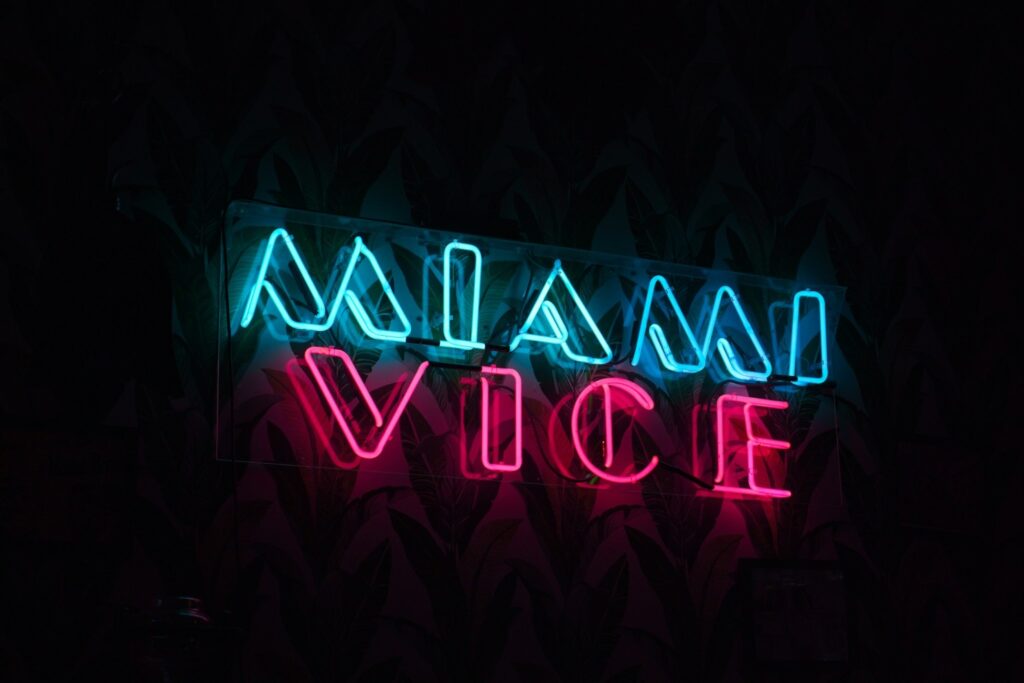
Michael Mann’s directive was clear: “No earth tones.” The visual palette featured vibrant pastels, whites, and bold tropical colors. This wasn’t just a stylistic choice; it was a deliberate tactic to shape a Miami that hovered between reality and aspiration, a hyper-saturated version of the city meant to be more influential than documentary realism could ever be.
The Sonic Revolution: Music as Urban Identity
Miami Vice earned its reputation as the “MTV Cop Show” by treating music not as background but as narrative architecture. The production allocated substantial budgets to music licensing, featuring contemporary artists such as Phil Collins (“In the Air Tonight” in the pilot became iconic), Glenn Frey, Tina Turner, and countless others. Having your song featured on Miami Vice could launch or revitalize a career.
But it was Jan Hammer’s original score that truly defined the show’s sound identity. His synthesizer work created what we might now call a “soundscape” for Miami: atmospheric, propulsive, and utterly distinctive. The main theme hit number one on the Billboard Hot 100 in November 1985 and won two Grammy Awards. This wasn’t just a TV theme; it was a legitimate hit that stood alone in popular culture.
From an urban studies perspective, this is significant. Hammer’s music established an auditory brand for Miami as impactful as any visual image. The sound conveyed sophistication, danger, exoticism, and modernity all at once. Cities have visual identities, but Miami Vice proved they could also have sonic identities, a concept I’ve explored extensively in my work in sensory urbanism and soundscape planning and design.
The show highlighted that sound shapes how we experience places. Every scene was carefully scored or soundtracked to amplify the emotional and spatial experience. Viewers weren’t just watching Miami, they were hearing it in a specific, curated way that made the city feel both real and aspirational.
Fashion and Visual Culture
The cultural influence went beyond music. Miami Vice popularized what became called the “Miami Look”: casual Italian sport coats worn over T-shirts, loafers without socks, and pastel suits that would have looked strange just years earlier. Don Johnson’s constant stubble made the “5 o’clock shadow” trendy for the first time in modern American culture.
Designers like Gianni Versace and brands like Ray-Ban saw measurable commercial success due to their visibility on the show. Costume designer Jodie Tillen traveled worldwide to find cutting-edge fashion and saw those looks become mainstream.
What seemed to be Miami fashion was often high international fashion that the show’s influence helped associate with the city. This offers a key lesson in place-making: perception can precede and shape reality.
The Urban Transformation: From Blight to International Destination
This is where the story becomes most engaging from an urban planning point of view, and where my two worlds, sound and cities, truly come together.
Before Miami Vice, South Beach went through serious urban decay. The Art Deco hotels that once hosted celebrities and mobsters in the 1950s had fallen into disrepair, becoming single-room occupancy buildings, retirement homes, and places linked to crime and poverty. Property values dropped dramatically. Most of the historic buildings were at risk of being demolished. The area was definitely not a tourist spot.
Then came the location scouts.
The production team discovered the Art Deco District and saw its visual potential. What happened next shows how media portrayal can significantly change urban paths. Production crews painted buildings in bright pastels that became synonymous with Miami Vice’s visual identity. These weren’t just temporary sets but real improvements to the built environment that remained long after filming stopped.
Consider this sequence: buildings were painted for a TV show, millions of viewers saw those buildings and the neighborhood as glamorous and architecturally significant, perception shifted from “declining neighborhood” to “hidden gem,” and investment followed perception.
I saw a similar pattern in Savannah when I was at SCAD. When big productions filmed in the city’s historic squares and streets, they weren’t just using Savannah as a backdrop; they were shaping how millions of viewers would see the city. Each film turned into a long advertisement for Savannah’s architecture and Southern charm. Tourism grew, preservation efforts picked up, and the city’s economy increasingly focused on being both a college town and a filming destination.
The Metrics of Transformation
The tourism impact was significant and measurable. Miami-Dade County experienced notable growth in visitor numbers during and right after the show’s run. The Art Deco District, once mostly overlooked outside preservation circles, became an international destination.
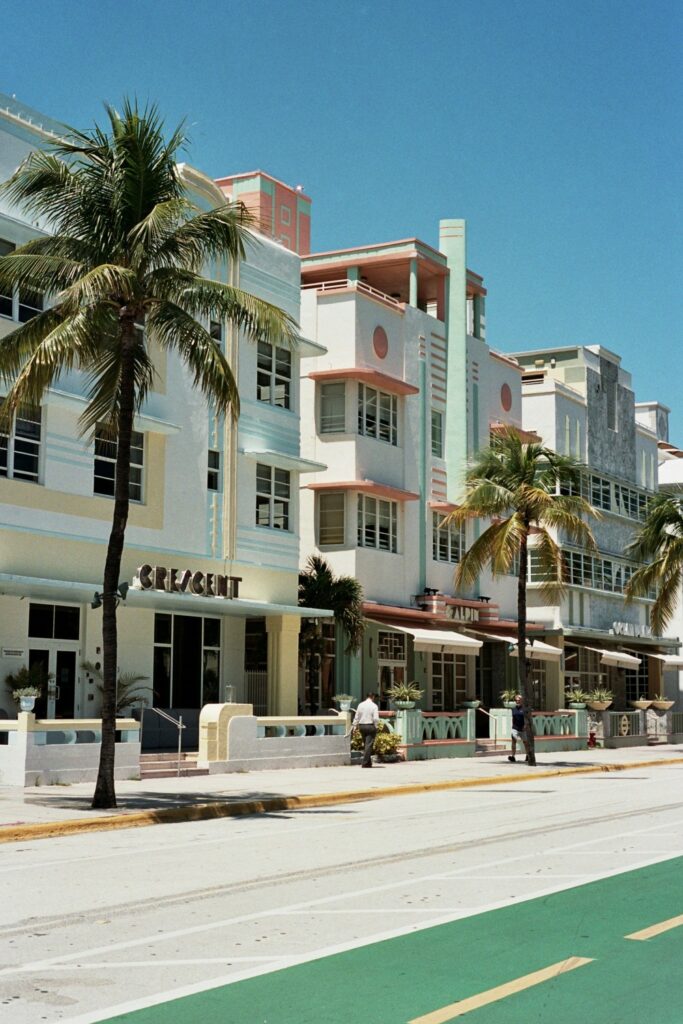
Today, the area features over 800 historic buildings, making it the largest collection of Art Deco architecture worldwide. Many of these structures are now listed on the National Register of Historic Places. The transformation of commercial real estate has been equally remarkable: South Beach shifted from one of Miami’s most economically challenged neighborhoods to one of its most upscale commercial and residential districts.
Annual Art Deco Weekend, founded by the Miami Design Preservation League in 1976, experienced exponential growth in attendance after Miami Vice brought international recognition to the area. What was once a modest local preservation effort evolved into a major cultural tourism event.
The Soundtrack to Urban Change
Having spent decades exploring how sound influences experience, I can’t help but notice how Miami Vice’s sonic choices reinforced its visual urban story. The music didn’t just accompany images of revitalized Art Deco buildings; it helped shape the aspirational identity that made revitalization possible.
When viewers heard Jan Hammer’s synthesizers over images of pastel-colored buildings and palm trees, they experienced a carefully designed multisensory message about what Miami could become. Sound and visuals worked together to generate desire, which in turn fueled tourism, and tourism supported preservation and growth.
This is why I treat popular culture seriously in my soundscape work. The sonic environment is never neutral; it shapes perception, influences behavior, and contributes to the identity and economic value of places.
Darker Reflections: Crime, Drugs, and Social Reality
Miami Vice did not shy away from showing the criminal networks that seriously threatened Miami during this time. The show aired during the peak of the cocaine trade, when Miami was a main entry point for drugs from South America. The city saw record murder rates in the early 1980s, much of it linked to drug trafficking.
The show’s honest depiction of drug cartels, violence, and corruption gave American audiences a rare look at organized crime. However, it also played a role in a complicated glamorization of a criminal lifestyle. The contrast between luxury items (Ferrari Testarossas, Cigarette boats, Armani suits) and criminal activity created troubling cultural stories about wealth and success.
This period also marked the acceleration of the “war on drugs,” with its deeply problematic mandatory minimum sentencing laws. These policies created stark disparities in how crack cocaine (associated with lower-income and predominantly Black communities) and powder cocaine (associated with wealthier, predominantly white users) were prosecuted. Over four decades, these policies have cost American taxpayers over $2.5 trillion with questionable impact on reducing drug use or addiction.
Miami Vice both reflected and reinforced certain cultural attitudes about drugs, crime, and urban life that had real policy consequences. Any honest assessment of its impact on the city must grapple with these complexities.
Lessons for Contemporary Urban Planning
As both a soundscape researcher and urban planner, I see several key lessons in the Miami Vice phenomenon.
1. The Power of Narrative and Image
How a place is perceived is crucial for investment and growth. Miami Vice transformed South Beach’s story from one of decline to one of potential. Modern cities spend a lot on branding, but few reach the cultural impact that Miami Vice achieved almost by accident.
2. Accidental Preservation Through Popular Culture
The show’s aesthetic choices, like the pastel colors on Art Deco buildings, reflected preservation interests, even if historic conservation wasn’t the main goal. Sometimes preservation happens through unexpected alliances and cultural moments rather than just policy actions.
3. Multisensory Place-Making
Miami Vice implicitly understood what urban planners and designers often overlook: places are experienced through multiple senses simultaneously. The show crafted a visual and auditory identity for Miami that was more powerful than either element alone.
4. Tourism as Economic Development Engine
The show illustrated how cultural representation could boost tourism, which in turn funded preservation and revitalization. South Beach’s economy was fundamentally reshaped around hospitality, entertainment, and design sectors. This model has since been adopted by cities worldwide, with varying levels of success and equity.
5. The Gentrification Question
While South Beach’s architecture was preserved and its economy revitalized, we must critically examine who benefited and who was displaced. The elderly residents, the working-class communities, and the people who inhabited South Beach during its decline—where did they go when property values skyrocketed?
This is the core tension in urban revitalization: Can we preserve and improve neighborhoods without displacing current residents? Miami Vice’s legacy is architecturally and economically successful, but its social equity results remain much more uncertain.
Contemporary Resonance
The Miami Vice model, a symbol of popular culture driving urban change, still operates today. Consider how Breaking Bad boosted tourism to Albuquerque, how Game of Thrones transformed Dubrovnik and Belfast, or how numerous Instagram-famous spots suddenly see surges in visitors and development pressures.
The difference lies in velocity and scale. Social media speeds up these processes dramatically. A place can shift from obscurity to a crowded destination in months instead of years. This presents both opportunities and challenges for urban planners who need to anticipate and manage these culturally driven transformations.
As someone working at the intersection of sound, community, and urban planning, I believe we need frameworks to understand and guide these interactions. How can cities benefit from positive cultural recognition while safeguarding existing communities and preserving genuine character? How can we be more intentional about the multisensory experience of urban environments?
Conclusion: Sound, Image, and the Future of Cities
Miami Vice remains a unique case study in how popular culture can intersect with urban development in ways that traditional planning frameworks rarely anticipate. The show didn’t just reflect Miami; it actively helped remake the city’s physical form, economic base, and cultural identity.
For me personally, Miami Vice was a gateway to understanding how sound and image work together to construct our experience of place. Those Jan Hammer synthesizers didn’t just provide a soundtrack; they helped create an emotional and sensory relationship with an urban environment that millions of people had never physically visited.
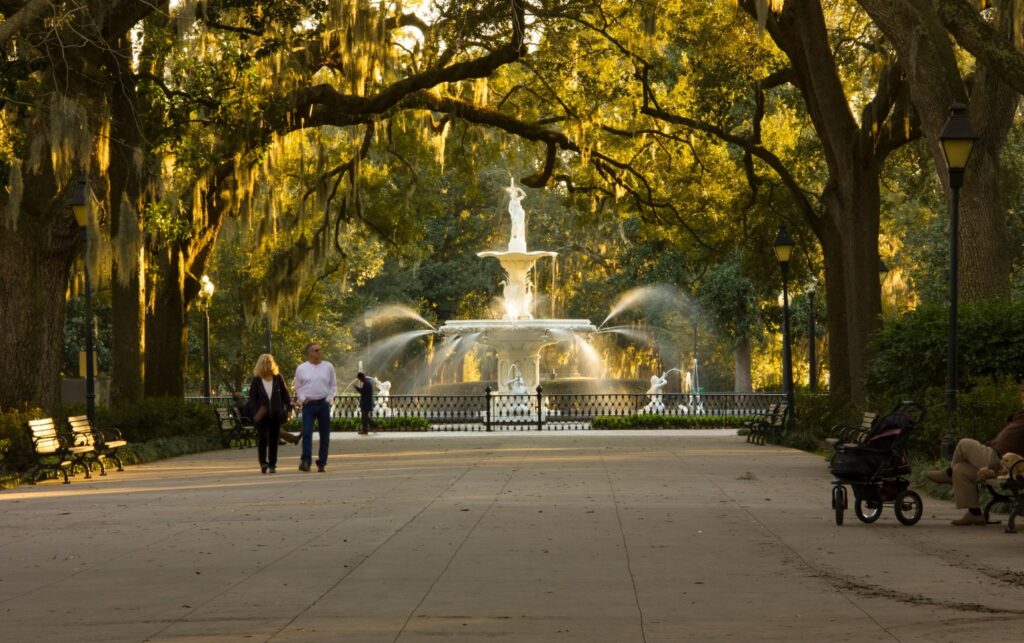
This understanding deepened during my years at SCAD in Savannah, where I witnessed firsthand how film production could highlight a city’s beauty and charm while fundamentally altering its economic trajectory. The lessons from both cities informed my path from filmmaker and music producer to urban planner and soundscape researcher.
This is the work I continue today: helping communities, cities, and organizations understand that the sonic environment is not incidental but essential to how we experience and value places. Sound shapes meaning. Sound influences behavior. Sound contributes to identity and economic vitality.
The lessons from Miami Vice suggest that urban planners, designers, and policymakers must think more broadly about the factors that influence cities. Media portrayal, cultural trends, soundscapes, and aesthetic movements can be just as important as zoning codes or infrastructure projects.
The challenge for contemporary urbanism is whether we can achieve positive transformation, architectural preservation, economic revitalization, cultural celebration, more intentionally and equitably. Can we capture what worked in South Beach while ensuring that existing residents benefit from change rather than being displaced by it?
These tensions between preservation and progress, between image and reality, and between economic development and social equity, remain central themes in urban studies. Miami Vice, despite its neon glamour and synthesizer soundtracks, provides a surprisingly rich text for exploring these ongoing questions.
And perhaps most importantly, it reminds us that cities are not just built environments but cultural constructs, shaped just as much by how they sound and how they’re portrayed as by concrete and policy.